

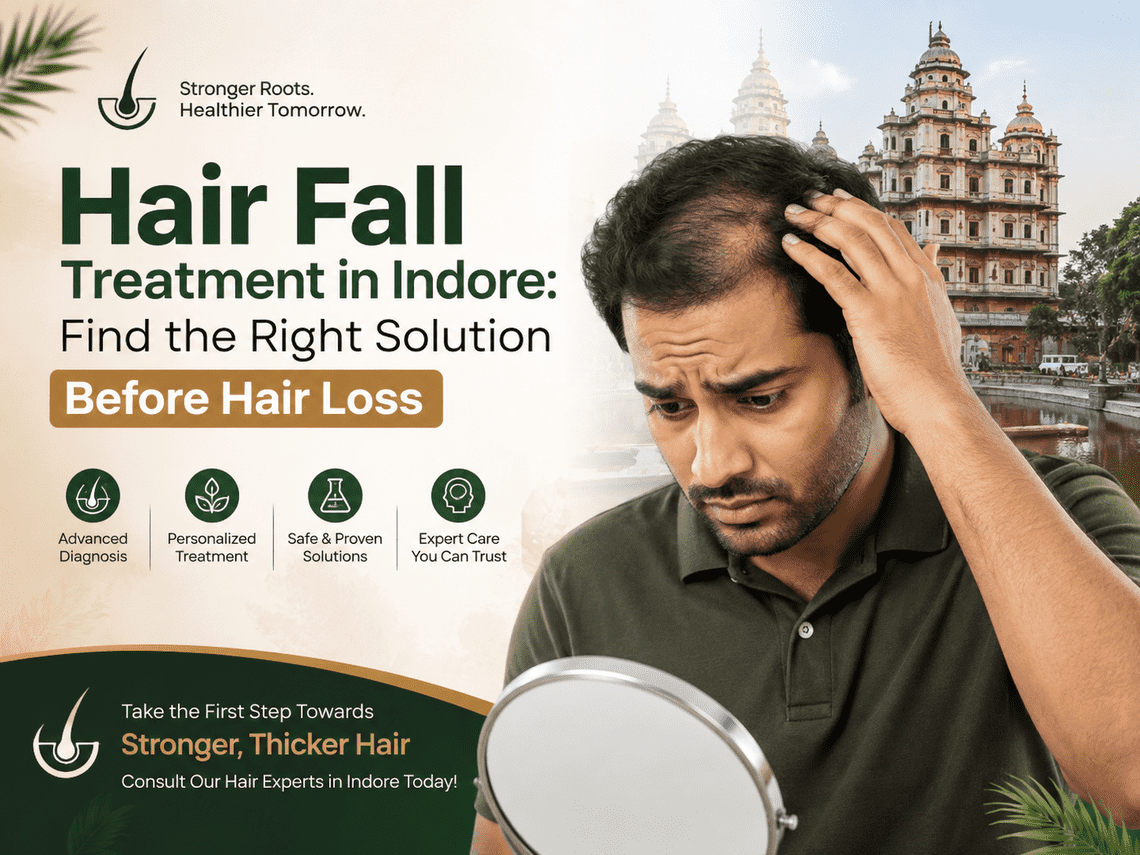
Hair fall has become a growing concern for people of all ages. Long working hours, pollution, stress, poor eating habits, and hormonal changes can all affect the health of your hair. While losing a small number of strands each day is a normal part of the hair growth cycle, continuous shedding or noticeable thinning should not be ignored.
If you are looking for Hair Fall Treatment in Indore, the first step is understanding why your hair is falling. Every individual experiences hair loss for different reasons, which means there is no single treatment that works for everyone. A professional assessment helps identify the underlying cause and allows specialists to recommend a treatment plan suited to your scalp condition and hair type.
Modern hair care focuses on preserving existing hair, improving scalp health, and encouraging healthier hair growth rather than offering temporary solutions. With timely care and the right guidance, many people are able to slow hair loss and improve hair density.
Why Does Hair Fall Occur?
Hair grows continuously in a natural cycle. As older strands shed, new hair grows from the follicles. When this balance is disturbed, hair loss becomes more noticeable.
Several factors can interrupt the normal growth cycle and weaken the hair roots.
Family History
Inherited hair loss is among the most common reasons for thinning hair. It often develops gradually and may begin with a receding hairline, wider hair parting, or reduced hair density over time
Nutritional Imbalance
Hair follicles require adequate nutrition to remain healthy. Diets lacking protein, iron, zinc, vitamin D, or vitamin B12 may affect hair growth and increase shedding.
Including nutrient-rich foods in your daily meals supports healthier hair from within.
Hormonal Changes
Fluctuations in hormones can temporarily or permanently influence hair growth. Conditions such as thyroid disorders, PCOS, menopause, and postpartum hormonal changes are commonly linked with increased hair fall.
Treating the hormonal imbalance often helps improve hair health.
Emotional and Physical Stress
Stress affects many body functions, including the hair growth cycle. Major life events, illness, surgery, lack of sleep, or prolonged emotional pressure may trigger excessive hair shedding several weeks later.
Managing stress through healthy lifestyle habits can support better hair recovery.
Scalp Health Problems
Healthy hair starts with a healthy scalp. Persistent dandruff, fungal infections, excessive oil buildup, or inflammatory skin conditions can create an unhealthy environment for hair follicles.
Professional scalp evaluation helps identify these issues before they contribute to long-term hair thinning.
Heat Styling and Chemical Damage
Frequent use of straighteners, curling irons, hair colours, bleaching products, and harsh chemical treatments can weaken the hair shaft, making it more prone to breakage.
Using gentle hair care products and limiting excessive styling helps protect hair quality.
Common Signs That Indicate You Need Hair Fall Treatment
Many people delay seeking professional advice until hair loss becomes clearly visible. However, early attention often produces better outcomes.
You should consider consulting a hair specialist if you notice:
- Hair shedding while combing or washing every day
- More hair strands collecting on your pillow or bathroom floor
- A widening hair partition
- Reduced hair volume compared to previous months
- Visible scalp under bright lighting
- Receding hairline
- Slower hair growth
- Thinning around the crown or temples
Ignoring these signs may allow hair loss to progress further, making treatment more challenging.
Why Early Diagnosis Makes a Difference
Hair follicles remain active only for a limited period after hair loss begins. Once a follicle becomes permanently inactive, natural hair growth may become difficult.
This is why early diagnosis is important.
A detailed consultation allows specialists to evaluate:
- Medical history
- Lifestyle habits
- Family history of hair loss
- Scalp condition
- Hair density
- Possible nutritional deficiencies
Based on these findings, a personalized treatment strategy can be created instead of relying on generic products or home remedies.
Early treatment may help:
- Slow ongoing hair fall
- Preserve healthy follicles
- Improve scalp condition
- Increase hair strength
- Support healthier regrowth over time
Can Hair Fall Be Prevented?
Although not every type of hair loss can be prevented, maintaining good scalp health and healthy daily habits can reduce the risk of excessive shedding.
Simple preventive measures include:
- Eating a balanced diet rich in protein and essential vitamins
- Drinking enough water throughout the day
- Managing stress with exercise or meditation
- Avoiding excessive heat styling
- Using mild shampoos suitable for your scalp type
- Getting adequate sleep every night
- Avoiding smoking and excessive alcohol consumption
Healthy lifestyle choices often complement professional treatments and improve long-term hair health
Modern Hair Fall Treatments Available in Indore
Hair fall treatment has evolved significantly over the years. Instead of relying on a single solution, specialists now recommend treatments based on the severity of hair loss, scalp health, age, medical history, and individual goals. A customized treatment plan often delivers better and longer-lasting results.
Below are some of the most commonly recommended treatments for people experiencing hair loss.
1. PRP (Platelet-Rich Plasma) Therapy
PRP therapy is a non-surgical procedure that uses the patient’s own blood to support healthier hair growth. After processing the blood, platelet-rich plasma containing natural growth factors is injected into targeted areas of the scalp.
These growth factors may help improve blood circulation around hair follicles and encourage stronger hair growth.
PRP therapy may help:
- Reduce excessive hair shedding
- Improve hair thickness
- Strengthen weak hair follicles
- Support natural hair regrowth
- Enhance scalp health
Results usually develop gradually, making consistency and follow-up sessions important.
2. Growth Factor Therapy (GFC)
Growth Factor Concentrate (GFC) therapy is an advanced regenerative treatment designed to stimulate inactive hair follicles. The procedure uses concentrated growth factors prepared from the patient’s own blood, similar to PRP but with a different preparation process.
Many specialists recommend GFC for individuals experiencing early to moderate hair thinning.
Potential benefits include:
- Improved follicle nourishment
- Better hair density
- Reduced hair breakage
- Healthier scalp environment
The suitability of GFC depends on the individual’s scalp condition and medical evaluation.
3. Medical Hair Fall Management
Not every person with hair loss requires advanced procedures. In many cases, medically supervised treatment is the first step.
Depending on the diagnosis, a hair specialist may recommend:
- Prescription medications
- Medicated lotions
- Hair growth serums
- Nutritional supplements
- Scalp care products
These treatments are selected according to the underlying cause rather than simply masking the symptoms. Self-medication is not recommended, as incorrect products may delay proper treatment.
4. Low-Level Laser Therapy (LLLT)
Low-Level Laser Therapy uses controlled laser light to stimulate the scalp. It is a painless and non-invasive treatment that aims to improve blood flow around the hair follicles.
Some people choose LLLT as part of a combined treatment plan alongside PRP or medication.
Possible advantages include:
- Improved scalp circulation
- Stronger hair roots
- Reduced hair thinning
- Better overall hair quality
Multiple sessions are generally required for noticeable improvements.
5. Mesotherapy for Hair
Hair mesotherapy involves delivering vitamins, amino acids, minerals, and other nutrients directly into the scalp through tiny injections.
This treatment is intended to nourish the hair follicles and improve scalp health.
Mesotherapy may help:
- Revitalize weak hair roots
- Improve hair texture
- Reduce dryness of the scalp
- Support healthier hair growth
The exact formulation varies depending on the patient’s condition.
6. Hair Transplant for Advanced Hair Loss
When hair follicles have stopped producing new hair permanently, non-surgical treatments may offer limited improvement. In such cases, a hair transplant may be considered.
During the procedure, healthy hair follicles from donor areas are carefully transplanted to areas with thinning or baldness.
Modern hair transplant techniques are designed to provide:
- A natural-looking hairline
- Permanent hair growth in transplanted areas
- Improved hair density
- Minimal visible scarring
However, a transplant is usually recommended only after a thorough evaluation confirms that it is the most appropriate option.
Which Hair Fall Treatment Is Right for You?
There is no universal solution for hair loss. The ideal treatment depends on factors such as:
- Your age
- Pattern of hair loss
- Duration of hair fall
- Family history
- Scalp condition
- Overall health
- Lifestyle habits
A professional consultation helps determine which treatment—or combination of treatments—is most suitable for your needs.
What Happens During a Hair Consultation?
A comprehensive consultation typically includes:
Discussion of Medical History
The specialist asks about your health, medications, lifestyle, and family history of hair loss.
Scalp Examination
The scalp is examined to identify signs of inflammation, dandruff, infection, or follicle damage.
Hair Density Assessment
The condition of your hair, its thickness, and the pattern of thinning are evaluated.
Treatment Planning
Based on the findings, a personalized treatment plan is created with realistic expectations and follow-up recommendations.
Choosing the Best Hair Fall Clinic in Indore
Selecting the right clinic plays an important role in achieving successful results. Instead of choosing a clinic based only on advertisements, consider the quality of consultation, expertise, and treatment approach.
A trustworthy clinic should offer:
- Experienced hair specialists
- Personalized treatment plans
- Modern diagnostic techniques
- Transparent consultation process
- High standards of hygiene
- Ongoing follow-up care
- Positive patient feedback
Taking the time to choose a reputable clinic can improve both your treatment experience and long-term outcomes
Daily Habits That Support Healthy Hair Growth
Professional treatments can improve hair health, but your daily routine also plays a significant role. Small lifestyle changes can help protect your hair and support long-term results.
Eat a Nutrient-Rich Diet
Hair is primarily made of protein, so your body needs adequate nutrients to produce healthy strands.
Include foods such as:
- Eggs
- Lentils and beans
- Fish
- Leafy green vegetables
- Nuts and seeds
- Fresh fruits
- Dairy products
- Whole grains
A balanced diet provides vitamins and minerals that help maintain healthy hair follicles.
Stay Hydrated
Water supports overall body functions, including scalp health. Drinking enough water each day helps keep your scalp hydrated and creates a healthier environment for hair growth.\
Maintain a Clean Scalp
Dust, sweat, excess oil, and product buildup can affect scalp health.
Wash your hair regularly using a shampoo that matches your scalp type. Avoid over-washing, as it may remove natural oils that protect the hair.
Avoid Excessive Heat Styling
Frequent use of hair dryers, straighteners, and curling tools may weaken the hair shaft and increase breakage.
Whenever possible:
- Let hair air dry naturally.
- Use heat protectant products before styling.
- Keep styling temperatures moderate.
Manage Stress Effectively
Long-term stress may interfere with the normal hair growth cycle.
Activities that may help include:
- Walking
- Yoga
- Meditation
- Regular exercise
- Deep breathing exercises
- Getting sufficient sleep
Reducing stress benefits both your overall health and your hair.
Avoid Tight Hairstyles
Constant pulling from tight ponytails, braids, or buns can strain hair follicles and contribute to traction hair loss.
Loose hairstyles are generally gentler on the scalp.
Hair Care Myths vs Facts
Many people follow advice they hear from friends or social media without checking whether it is accurate. Understanding the facts can help you make better decisions about your hair.
| Myth | Fact |
|---|---|
| Cutting hair frequently makes it grow faster. | Trimming removes split ends but does not affect the growth rate from the scalp. |
| Hair oil alone can stop hair fall. | Hair oil may improve scalp moisture, but it cannot treat medical causes of hair loss. |
| Hair fall happens only to older adults. | Hair loss can affect teenagers, young adults, and older individuals depending on genetics, health, and lifestyle. |
| Wearing a cap causes baldness. | Wearing a clean, properly fitted cap does not cause permanent hair loss. |
| Every hair loss treatment works for everyone. | Treatment should always be based on the cause of hair loss and individual scalp condition. |
When Should You Visit a Hair Specialist?
It is advisable to seek professional guidance if you experience:
- Hair fall lasting more than two to three months
- A receding hairline
- Noticeable thinning on the crown
- Bald patches
- Sudden or excessive hair shedding
- Persistent scalp itching, redness, or dandruff
- Hair becoming finer over time
Early evaluation allows treatment to begin before hair follicles become permanently inactive.
Conclusion
Hair fall is a common concern, but it should never be ignored when it becomes persistent or excessive. Identifying the root cause is the first and most important step toward healthier hair. Whether your hair loss is related to genetics, hormonal changes, stress, nutritional deficiencies, or scalp conditions, the right diagnosis can help determine the most effective treatment plan.
Modern Hair Fall Treatment in Indore includes advanced options such as PRP therapy, Growth Factor Concentrate (GFC), Low-Level Laser Therapy (LLLT), mesotherapy, medically supervised treatments, and hair transplantation for suitable candidates. These treatments are most effective when combined with healthy lifestyle habits, proper scalp care, and regular follow-up.
If you notice continuous hair thinning, increased shedding, or changes in your hairline, consulting an experienced specialist early can help preserve existing hair and improve your chances of achieving stronger, healthier hair growth.
Frequently Asked Questions
Q. Which is the best hair fall treatment in Indore?
Ans: The best treatment depends on the underlying cause of hair loss. After a detailed scalp examination, a specialist may recommend PRP therapy, GFC therapy, medications, laser therapy, mesotherapy, or other personalized treatments.
2. How long does it take to see results from hair fall treatment?
Ans: Most people begin noticing improvements within three to six months. However, results vary depending on the type of treatment, the severity of hair loss, and how consistently the treatment plan is followed.
3. Can hair fall be treated without surgery?
Ans: Yes. Many cases of hair loss can be managed with non-surgical treatments such as PRP, GFC therapy, mesotherapy, laser therapy, scalp treatments, and medically supervised medications. Surgery is generally considered only for advanced hair loss.
4. Is PRP therapy safe for hair fall?
Ans: PRP therapy is generally considered safe because it uses platelets obtained from the patient’s own blood. A qualified specialist will evaluate whether it is the right option based on your scalp condition and medical history.
5. What should I look for when choosing a hair fall clinic in Indore?
Ans: Choose a clinic with experienced specialists, modern diagnostic facilities, personalized treatment plans, hygienic practices, transparent consultations, and positive patient reviews. A clinic that focuses on identifying the root cause of hair loss is more likely to recommend an effective long-term solution.